Sock Toe Seams: What Seamless Means and How to Approve a Sample
Learn what seamless means when discussing sock toe construction. Use a process description and finished sample to assess the proposed join and define approval requirements.
Sock Toe Seams: What “Seamless” Means and How to Approve a Sample
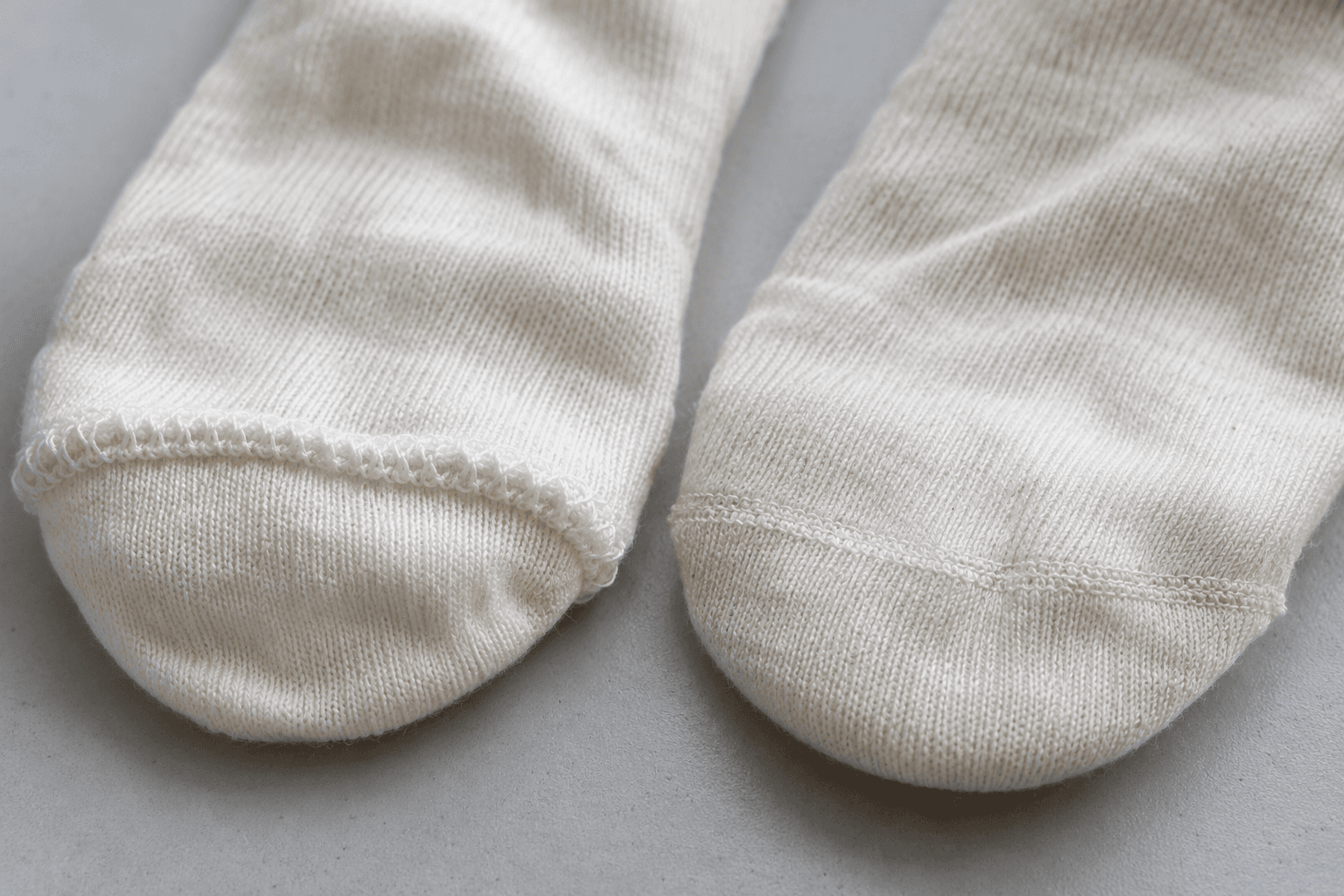
A request for seamless socks needs a precise explanation of the toe finish you expect. Does the requirement concern the appearance of the join, its thickness, or how it feels when worn? Sock-toe closure can involve different seaming or linking methods, and the word “seamless” alone does not identify the construction. For a custom order, pair the supplier’s process description with a finished sample. That gives both sides a concrete reference for discussing the toe area before approving production.
Separate the process name from the finished result
The closure method and the resulting seam are related parts of a specification, but they answer different questions. The method describes how the toe is joined. The sample shows the resulting construction, thickness, and appearance for the particular sock under review.
Ask the supplier to identify the proposed method in writing and connect that explanation to a specific sample. If several options are offered, request a separate description for each. A label such as hand-linked, machine-linked, or seamless should lead to a discussion of the actual process being proposed, rather than serve as the entire specification.
Avoid selecting a method solely because its name sounds more refined. Establish what you need to approve, then assess the proposed construction against that requirement.
Define “seamless” in terms the buyer can evaluate
“Seamless” or “no-show seam” may describe appearance or feel. Neither term, by itself, establishes that the toe has no joining structure. A useful brief explains which characteristic matters and how you intend to review it.
For an appearance requirement, ask to examine the toe from the outside and inside. For a feel requirement, discuss an appropriate sample assessment with the supplier. If thickness matters, request an agreed way to describe or assess it. Do not turn an informal impression such as “quite flat” into an unstated numerical limit.
Write a short acceptance statement before requesting revisions. For example: “Please provide a sample of the proposed toe closure for review of the inner join and outer appearance.” Add any specific concerns you have about the submitted sample, using photographs or annotations where helpful.
Review the join on a finished sock
The local process guidance calls for confirmation through both a process description and a finished sample. Use those two references together. A description without a sample leaves the finished result unreviewed; an unidentified sample leaves uncertainty about which process the supplier proposes for the order.
A practical buyer review can include these questions:
Which closure method does this sample represent?
Where is the joining structure, and what does it look like inside and outside?
What thickness or tactile requirement are we asking the supplier to meet?
Which observations require a revised sample?
Which sample version is being submitted for final approval?
These are suggested review questions. Agree on the actual acceptance criteria with the supplier for your product, rather than treating the list as an established inspection standard.
Compare alternatives against the same brief
When assessing multiple samples, give each one a clear identifier. Record observations in the same categories so that the decision is easy to follow. A simple comparison sheet might include the supplier’s method description, external appearance, internal appearance, buyer comments, and approval status.
If the alternatives also differ in material or overall construction, record those differences. Do not attribute every observed difference to the closure method without checking what else changed. Ask for clarification when the submitted examples cannot answer the comparison you intended to make.
Ask how the closure fits the proposed equipment
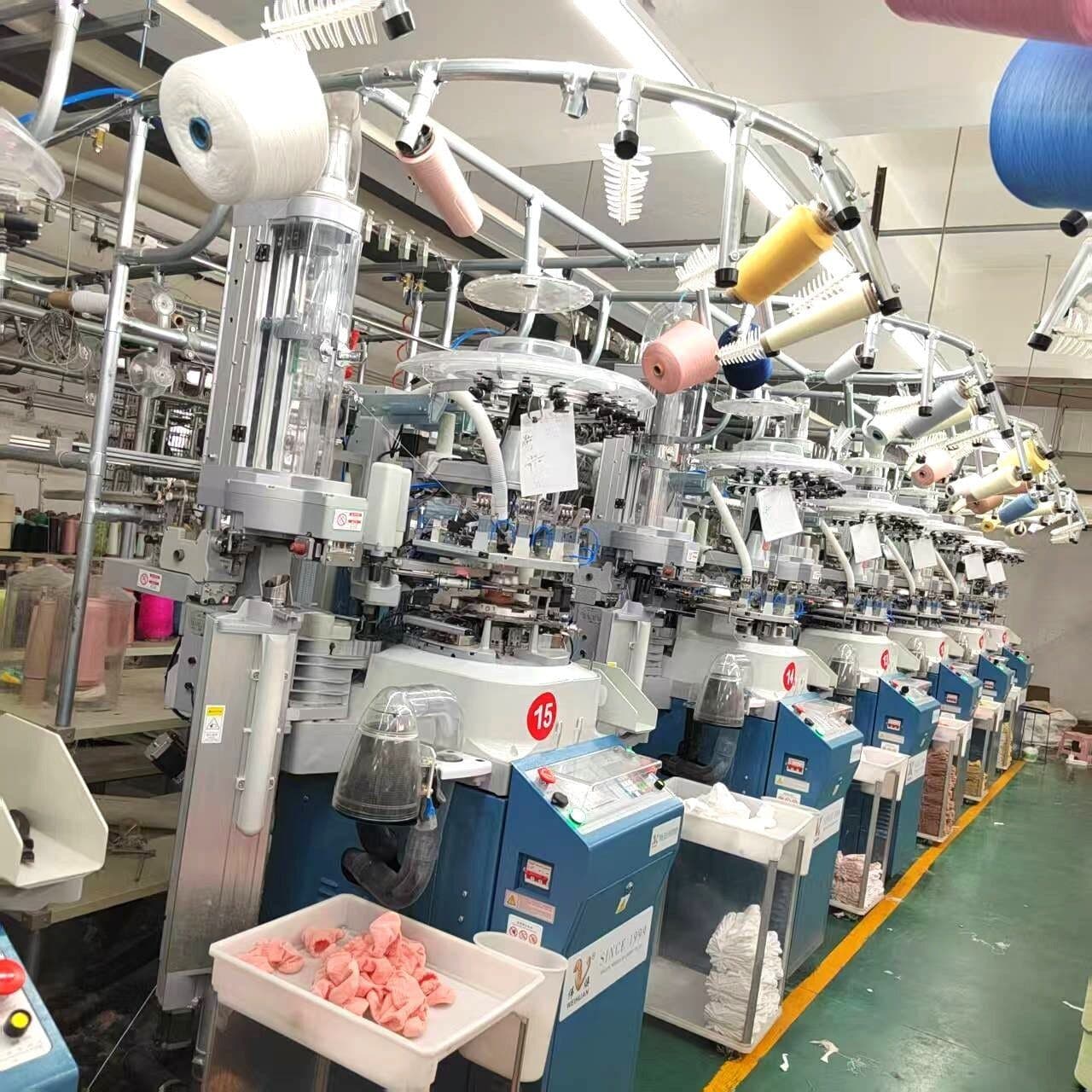
An integrated workflow can involve sock-body knitting and toe closure on integrated equipment. The specific machine, needle count, compatible styles, and whether operations overlap still need confirmation for the equipment and order.
For procurement, the useful question is how the supplier proposes to make the selected product and reproduce the approved finish. Request the equipment or process details that are necessary for that discussion. Avoid assuming that an integrated setup establishes a particular production speed, cost advantage, or toe appearance.
Likewise, do not use machine integration as a substitute for sample approval. Equipment terminology describes part of the production approach; the approved sample defines the finished reference you have actually reviewed.
Record the decision and resolve revisions
As a recommended approval practice, identify the sample’s product specification, color, and customer approval status. Decide with the supplier which fields and tools will be used to keep that record. The purpose is to make the accepted version clear when the order moves forward.
Write revision requests as observations and actions. “Please review the marked inner join and submit a revised sample” gives a clearer next step than “make it better.” If you request a different method, ask the supplier to confirm the replacement process description as well.
Keep approval for the toe finish distinct from approval for unrelated details. If color or packaging remains open, record that separately. This proposed communication practice should be agreed for the order; it does not establish that a supplier already operates a particular record system.
Frequently Asked Questions
Does a seamless toe mean there is no joining structure?
The term alone does not establish that. Ask whether the supplier is describing appearance or feel, and confirm the actual construction through a process description and finished sample.
Does a particular toe-closing method guarantee a thinner finish?
Assess thickness on the proposed finished sample and agree on the requirement for your order. A method name alone is insufficient evidence for a guaranteed result.
What should I ask about an integrated sock machine?
Confirm the specific equipment, its suitability for your style, and the proposed knitting and closure workflow. Ask separately whether operations overlap; integration alone does not answer that question.
What should be recorded when I approve the toe sample?
Consider recording the sample identifier, relevant product specification, color, and approval status, alongside the agreed closure description. Confirm the record format with the supplier.
Conclusion
Specify the toe finish through a clear requirement, a supplier process description, and an identified finished sample. Define what seamless means for your order, review the actual join, and document any revisions before approval. These steps provide a practical basis for discussing production without relying on a method name to promise a particular result.
Topics
- sock toe seams
- seamless toe socks
- sock toe closure
- sock toe linking
- toe seam sample approval
- custom sock toe finish