Sock Knitting Machine Needle Counts: A Custom Order Guide
Explore the documented needle counts for three sock machine series. Learn how to discuss equipment selection without treating the count alone as a complete product specification.
Sock Knitting Machine Needle Counts: What Buyers Should Confirm
When a supplier quotes a needle count for custom socks, ask which machine series it belongs to and which product specification it supports. A count without that context leaves important questions unanswered. The documented equipment at customizesocks.com includes single-cylinder plain-knit, single-cylinder terry, and a double-cylinder series, with different count lists. This guide explains those recorded options and offers a practical way to connect an equipment discussion to the actual sock, artwork, and sample you intend to approve.
Start with the machine series
The factory equipment record distinguishes three series. Keep that distinction when discussing a quotation: a count listed for one series should not be treated as a confirmed option in another.
| Documented machine series | Recorded needle counts |
| --- | --- |
| Single-cylinder plain-knit | 84, 96, 120, 144, 168, 200 |
| Single-cylinder terry | 84, 96, 108, 132, 144, 168 |
| Double-cylinder series | 84, 96, 120, 144, 168 |
These are the counts in the documented equipment record. They provide a starting point for asking about a proposed order, rather than an assurance that every listed option suits every design. Ask the supplier to identify the intended equipment for your particular specification.
For example, 200 appears in the plain-knit list, while 108 and 132 appear in the terry list. If a proposal refers to one of those counts, retain the series name alongside it. This simple notation makes later questions about the sample more precise.
Keep circular and flat-machine descriptions clear
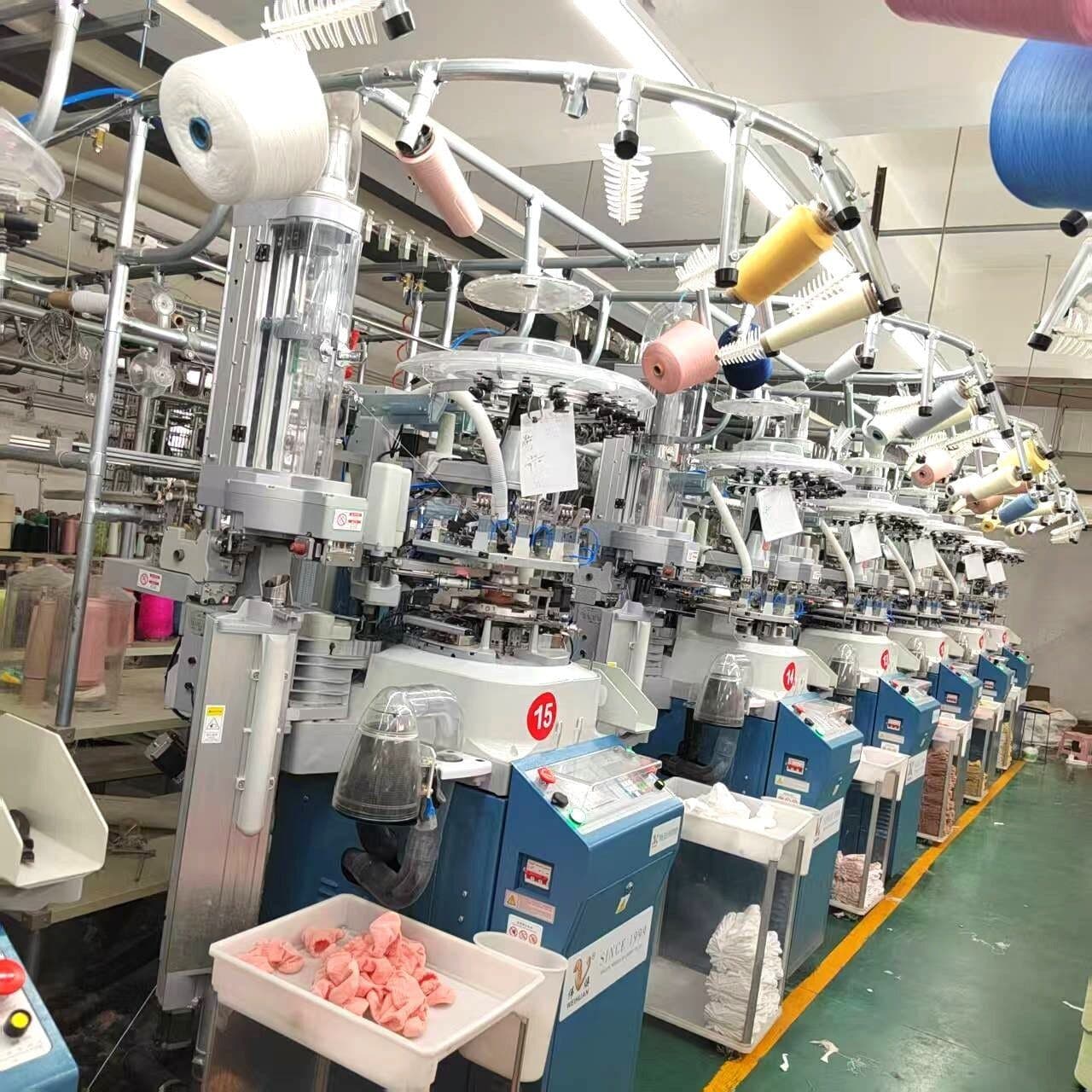
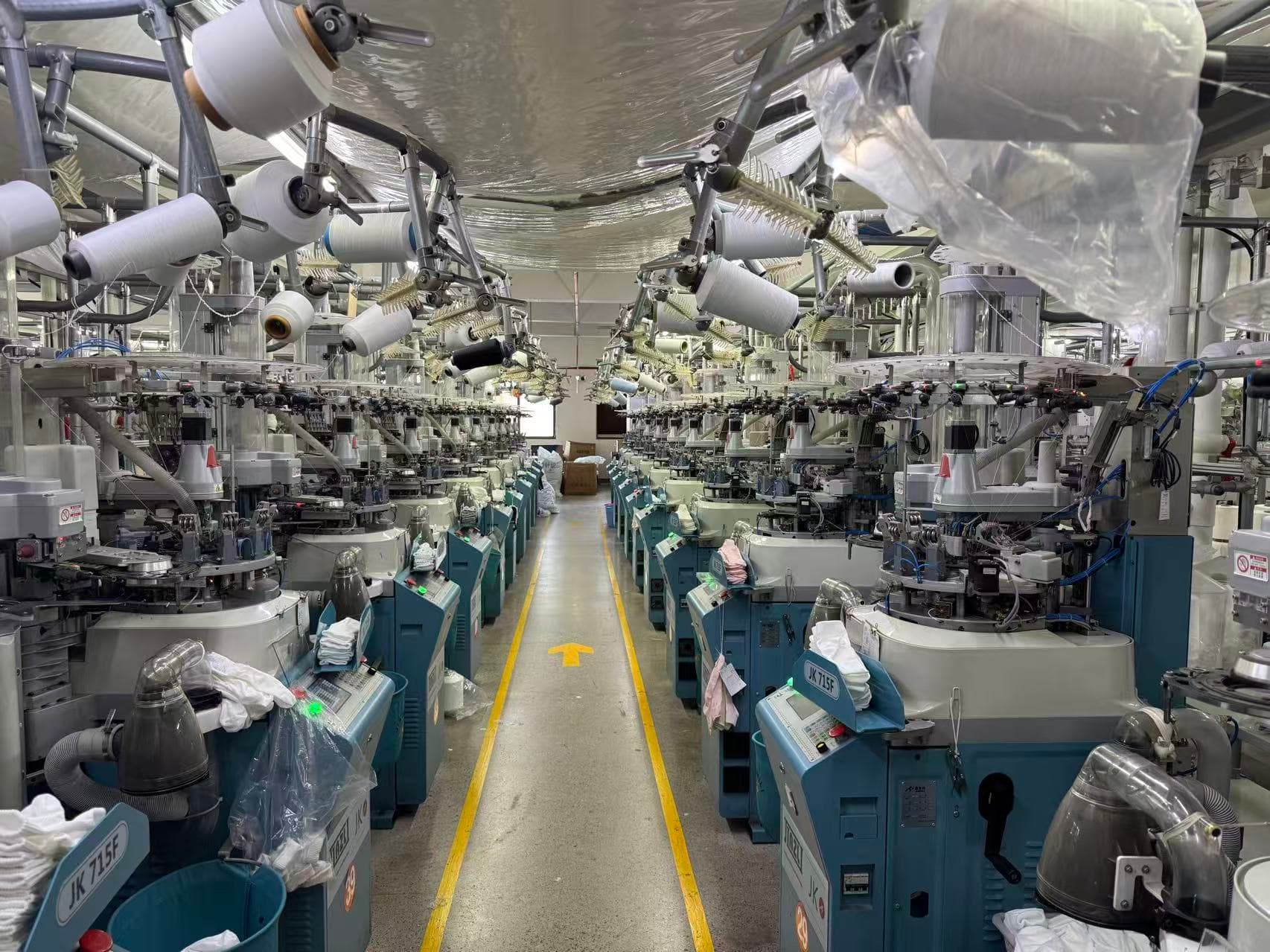
The recorded single-cylinder plain-knit sock machines are circular sock machines. They should not be described as flat knitting machines in an order discussion or product explanation.
If a supplier document uses a broader description, ask for the intended machine series to be stated explicitly. Copy that description into your working specification rather than replacing it with an equipment term you have inferred from a photograph.
Buyers do not need to prepare machine settings to ask a useful question. A request such as “Please identify the proposed machine series and needle count for this sample” gives the supplier a clear point to answer. Follow up separately on any product details that remain unresolved.
Treat the count as one part of the proposal
The count list does not provide a selection rule for every size, yarn, or artwork. Avoid turning it into a chart that assigns each count to a product category without a supplier assessment.
Instead, submit the intended sock specification and ask the factory to propose suitable equipment. Request a sample that represents that proposal. If more than one setup is offered, ask what the alternatives mean for the particular design and which details you should compare.
Do not use the largest number as a purchasing shortcut. A more useful decision connects the proposed equipment to the product requirements and the sample result. When the supplier recommends a change, record both the new proposal and the reason given for your order.
Ask for clarification when an equipment reference changes
A revised sample may arrive with a different machine description. Ask whether the change affects the proposed construction, artwork preparation, or other agreed details. Request an updated specification where needed.
This is a suggested buyer communication practice. It helps define the information you want to approve without assuming that the supplier already uses a particular equipment record format for customer orders.
Review jacquard artwork on the intended equipment
For a jacquard design, the artwork must be converted into data readable by the target sock machine and its programming system. The different color areas need to correspond to the relevant yarn feeds. File format, software, feed count, and machine compatibility require confirmation for the actual equipment.
This creates an equipment-specific question beyond the needle count: how will the proposed design be prepared for that machine? Ask the supplier which artwork inputs it needs before treating your design file as ready for production.
The appearance of knitted jacquard artwork may also be affected by the target equipment and knit structure. Review a sample made on the intended equipment for proportions, outlines, and text legibility. Use the result to discuss adjustments to the design.
A needle-count quotation does not replace that review. If small lettering is important, identify the exact lettering in the brief and ask to inspect it in the sample. Agree on the result for that design instead of inventing a universal minimum font size.
Confirm local knit structures separately
If a sock combines different knit structures in different areas, ask whether the target equipment and style support the proposed combination. Plain knit, terry, mesh, and rib should be evaluated with the intended design and sample; the placement boundaries also require confirmation.
Annotate the drawing to show the requested areas, then ask the supplier to confirm what is feasible. A machine appearing in an equipment list does not establish that it can create every structure at any location.
Keep this discussion tied to the sample version. If a boundary or construction changes during development, request a clear explanation of the revision before approving the updated product.
Record the equipment decision with the sample
As a proposed approval practice, identify the product specification, color, and customer approval status associated with the sample. Add the equipment reference where it is useful for the order, and agree with the supplier on the record fields and format.
Before making the final decision, check that the intended series, count, artwork reference, and any open construction questions are clearly stated. This produces an order-specific reference for the next discussion, rather than relying on a number remembered from an earlier quotation.
Frequently Asked Questions
Which needle counts are documented for plain-knit machines?
The single-cylinder plain-knit equipment record lists 84, 96, 120, 144, 168, and 200 needles. Confirm the proposed option for the intended sock specification.
Are the terry and double-cylinder count lists identical?
The terry list is 84, 96, 108, 132, 144, and 168. The double-cylinder list is 84, 96, 120, 144, and 168. Keep the machine series attached to the quoted count.
Does a needle count guarantee that small artwork will be readable?
Review artwork proportions, outlines, and text on a sample made with the intended equipment and knit structure. A count alone does not establish an acceptance result for your design.
Is the recorded single-cylinder plain-knit machine a flat knitting machine?
The recorded single-cylinder plain-knit sock machine is a circular sock machine. Use that description when clarifying the proposed equipment.
Conclusion
Discuss needle count together with the machine series and the actual product requirements. Use the documented lists to ask precise questions, then confirm artwork and knit structures through the intended equipment and sample. Record the selected proposal alongside the approved version so the production discussion has a clear reference.
Topics
- sock knitting machine needle counts
- plain knit sock machines
- terry sock machine needles
- double cylinder sock machines
- custom sock machine selection
- jacquard sock sampling